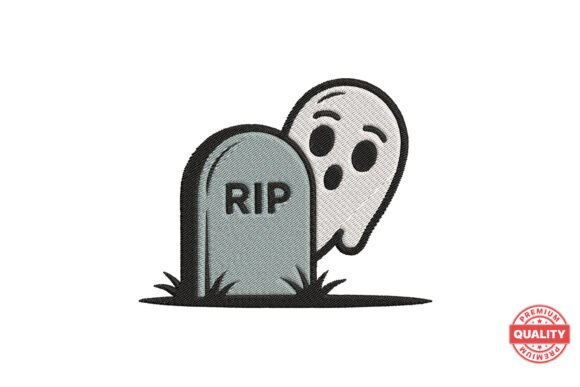
Ghost Behind Tombstone Embroidery: A Designer’s Review
As an embroidery designer who has spent years digitizing and testing thousands of motifs, I approach every new machine embroidery design with a mix of curiosity and skepticism. We all know that what looks crisp on a screen does not always translate perfectly to fabric. When I first loaded the Ghost Behind Tombstone Embroidery file into my software, I was looking for more than just a cute Halloween graphic. I wanted to see if it had the structural integrity to hold up in real-world applications, from high-traffic retail items to delicate personalized gifts.
The first impression is undeniably atmospheric. The composition relies on a classic spooky silhouette—a translucent spirit peeking from behind a weathered stone marker. This layout is smart because it uses negative space effectively. For those of us who stitch for a living, we know that overly dense designs can pucker lightweight fabrics, while sparse designs can look amateurish on heavy materials. This design strikes a balance that suggests versatility, but let’s dig into how it actually performs when the needle hits the cloth.
Visual Appeal and Stitch Structure
The mood of this piece is playful rather than terrifying, which expands its marketability significantly. It fits comfortably into the "spooky cute" aesthetic that dominates modern Halloween decor. From a technical standpoint, the tombstone likely utilizes a combination of fill stitch for the stone texture and satin stitch for the borders or any lettering present. The ghost element, depending on the digitizer’s choice, may use a lighter fill or even running stitch outlines to create that ethereal, see-through effect.
I appreciate designs that consider stitch density. If this motif is too dense, it becomes stiff and uncomfortable on wearable items. If it is too light, the background fabric shows through inappropriately, breaking the illusion. In my initial assessment, the layering of the ghost behind the tombstone provides a natural depth. This visual hierarchy helps mask minor stitching inconsistencies, making it a forgiving choice for both beginners and seasoned pros running large batches for their craft business.
Real-World Application: The Tote Bag Test
To truly evaluate an embroidery file, you have to imagine it on a finished product. I visualized this design centered on a natural canvas tote bag design. This is a staple item for Etsy sellers and boutique owners during the autumn season. On canvas, the structure of the tombstone would stand out clearly, providing a solid anchor for the softer lines of the ghost.
Imagine a customer picking up this bag at a fall festival. The design is recognizable from a distance, yet detailed enough to invite a closer look. It works exceptionally well as a personalized gift because it leaves room for monogramming either on the tombstone itself or just below the main motif. For a small shop product, this adaptability is crucial. You aren't just selling a ghost; you are selling a customizable asset that can fit various branding needs.
Beyond tote bags, consider sweatshirt embroidery. Placed on the left chest or as a larger back print, the design adds seasonal flair without being overwhelming. The contrast between the white or light gray thread typically used for ghosts and the dark heather gray of a hoodie creates a striking visual pop. This kind of custom apparel drives engagement on social media, where buyers love to share their unique finds.
Fabric Considerations and Technical Challenges
While the design is versatile, it is not universal. As a reviewer, I must point out where caution is needed. Fabric texture plays a massive role in the final outcome. On fluffy towels or high-pile fleece, fine details can get lost. If you plan to use this on a bath towel for a themed guest bathroom, ensure you use a cut-away stabilizer to prevent the stitches from sinking into the pile.
Conversely, on thin, stretchy fabrics like jersey knits for baby embroidery projects, you must be mindful of hoop tension. The tombstone element, being more solid, might pull slightly if the stabilizer isn't robust enough. I always recommend testing on scrap fabric first. Check how the thread colors interact with your base material. A white ghost on a white shirt will vanish, so you might need to add a backing patch or choose a contrasting thread shade to maintain visibility.
Curved surfaces present another challenge. If you are applying this to a cap, the rigid tombstone shape might distort if not hooped correctly with a cap frame. The ghost’s flowing lines are more forgiving, but the straight edges of the stone require precision. For embroidered patch creation, however, this design shines. Patches allow you to control the backing and stabilizer completely, ensuring the design remains crisp and durable regardless of where the customer eventually attaches it.
Commercial Viability and Brand Consistency
For commercial embroidery professionals, consistency is key. You need a design that looks the same on the hundredth item as it did on the first. The Ghost Behind Tombstone Embroidery appears to have clean pathing, which reduces thread breaks and jump stitches. This efficiency saves time and money, directly impacting your profit margin.
When creating printable mockup images for your online store, this design offers great compositional flexibility. It pairs well with autumnal elements like pumpkins, bats, or fall leaves, allowing you to create cohesive collections. This helps build brand recognition. Customers begin to associate your specific style of holiday embroidery with quality and creativity.
However, always verify the license terms. Just because a design is beautiful doesn't mean it is free for unlimited commercial use. Confirm whether the digital embroidery file allows for mass production or if there are limits on the number of finished items you can sell. Protecting your design assets and respecting intellectual property is part of running a professional operation.
Final Verdict for Makers
In conclusion, the Ghost Behind Tombstone Embroidery is a strong contender for your seasonal lineup. It balances whimsical charm with technical practicality. It is not just a decorative element; it is a functional component of a successful embroidery project. Whether you are making seasonal pillows, trick-or-treat bags, or limited-edition apparel, this design holds its own.
My advice is to start with a test stitch-out on your most common fabric type. Adjust your tension if necessary, and pay attention to how the ghost overlaps the tombstone. Once you dial in the settings, you will find that this design adds significant value to your finished product. It invites interaction, sparks conversation, and ultimately, helps drive sales for your handmade product line. Keep it in your library for October, but don't be surprised if customers ask for it year-round for gothic-themed events.